N. David Mermin coined the phrase "Shut up and calculate!" I would agree that, at the time, this approach served a purpose, as calculations were extremely time-consuming. Today, however, such an attitude acts as a critical constraint on our freedoms. While it is true that someone with an exceptional grasp of mathematics might intuitively embrace quantum physics, the subject is so complex that, for the average person, it remains inaccessible through the medium of mathematics. And the ordinary person is left with no choice but to "Shut up and have faith".
- Details
- Written by: Simon Litt
- Category: Physics
If all photons travel at the speed of light, then why are two photons traveling in opposite directions relative to each other also traveling at the speed of light? Why don’t the speeds add up?
This note is a preparation for the next one, which will pose a more complex question. The answer is actually quite simple. And the short answer is that it is precisely because the photon itself travels at the speed of light.
- Details
- Written by: Simon Litt
- Category: Physics
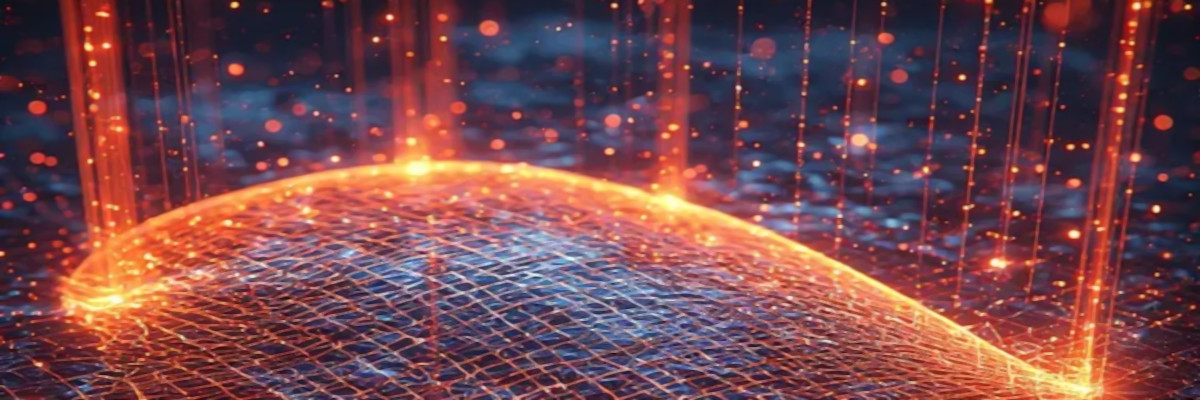
Mass determines inertial and gravitational properties. In my previous post, I described a model that clearly explains the gravitational attraction due to the Higgs field. But I didn’t write anything about the inertial component.
- Details
- Written by: Simon Litt
- Category: Physics
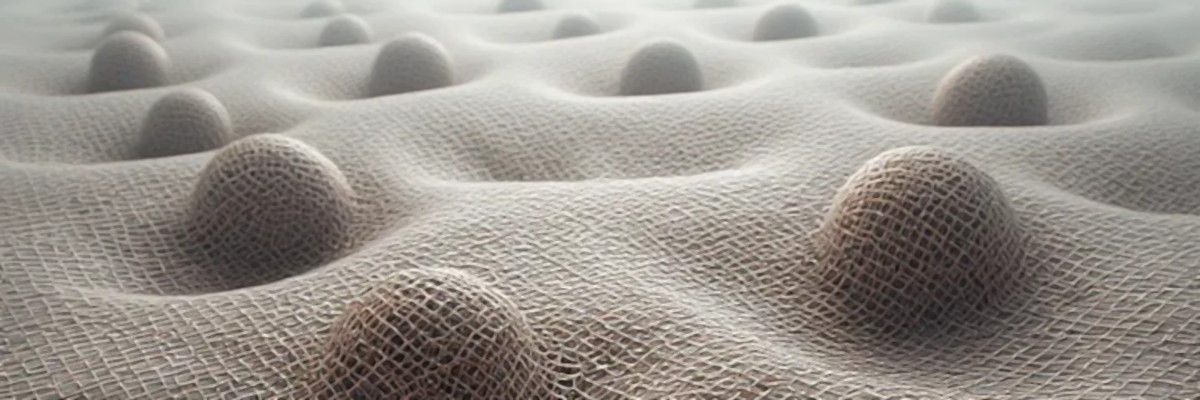
We are all familiar with the model of gravity, which is an elastic surface on which balls are placed. I just came across a model of the Higgs field that consists of a regular grid of spheres. If a particle passes freely between them, it remains massless. If it doesn’t, it pushes them apart and gains mass. And the more the particle pushes these spheres apart, the more mass it gains. The model is good, but it does not explain gravity.
- Details
- Written by: Simon Litt
- Category: Physics
Read more: A model of how the Higgs field gives particles mass

For many years I have been interested in the question of how the universe performs calculations. Why our calculations require colossal resources. It is very difficult for us to model not only the absorption of a star by a supermassive black hole, but even the behavior of an ordinary, at first glance, liquid. What can I say about liquids? Even an atom more complex than hydrogen is difficult to model. And the more accurate our model, the more impossible our calculations become. But in nature, even in familiar conditions, an incredible number of interactions occur. And in space the scale of events is even more colossal. And somehow no lags are noticeable.
It would seem a difficult question. And our minds cannot understand how this can be realized. However, it seems that everything is very simple. If we accept that all matter we perceive is a perturbation of quantum fields, then everything comes down to the superposition of waves in quantum fields.
P.S. If only it were so simple to understand what quantum entanglement is…
- Details
- Written by: Simon Litt
- Category: Physics