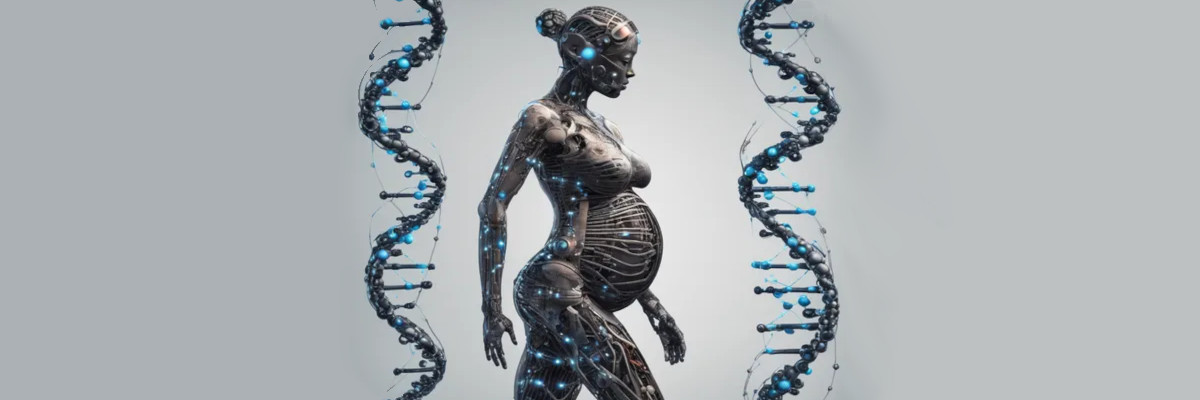
Mankind is quite conservative, and very wary of new technologies. This conservatism is evolutionary justified. Over hundreds of millions of years, the development of new opportunities was slow, our ancestors had hundreds of thousands of years for psychological adaptation. Now a lot of fears are connected with neural networks. But in order to understand this question, one must first understand the difference between organic life and mechanisms.
- Details
- Written by: Simon Litt
- Category: Real AI
Even today, the competition of chatbots demonstrates the amazing abilities of AI. But who is AI? Where is the line between mind and life? It would seem a simple question, because strictly formally, AI clearly cannot be recognized as alive. However, the biological virus is not recognized as living by a significant part of the scientific community, but fundamentally it uses the same mechanisms as the human body. In the same way, the first replicators would hardly have been perceived as alive by us. But in the process of further evolution, these replicators gave rise to all the existing diversity of life. But in the process of further evolution, these replicators gave rise to all the existing diversity of life. And what the competition of corporations will lead to (smaller companies do not have the capacity to develop full-fledged AI, but they can generate new breakthrough ideas) is now impossible to predict. We can both create a competitor that will replace our species, so we can create a partner that occupies a new ecological niche. There is another possibility that we will leave AI as just a tool, but this probability is quite small, since it requires us to have huge intelligence ourselves.
- Details
- Written by: Simon Litt
- Category: Real AI
Read more: Robots and artificial intelligence - Мachine rights